





Henderson Native Pollinator Gardens
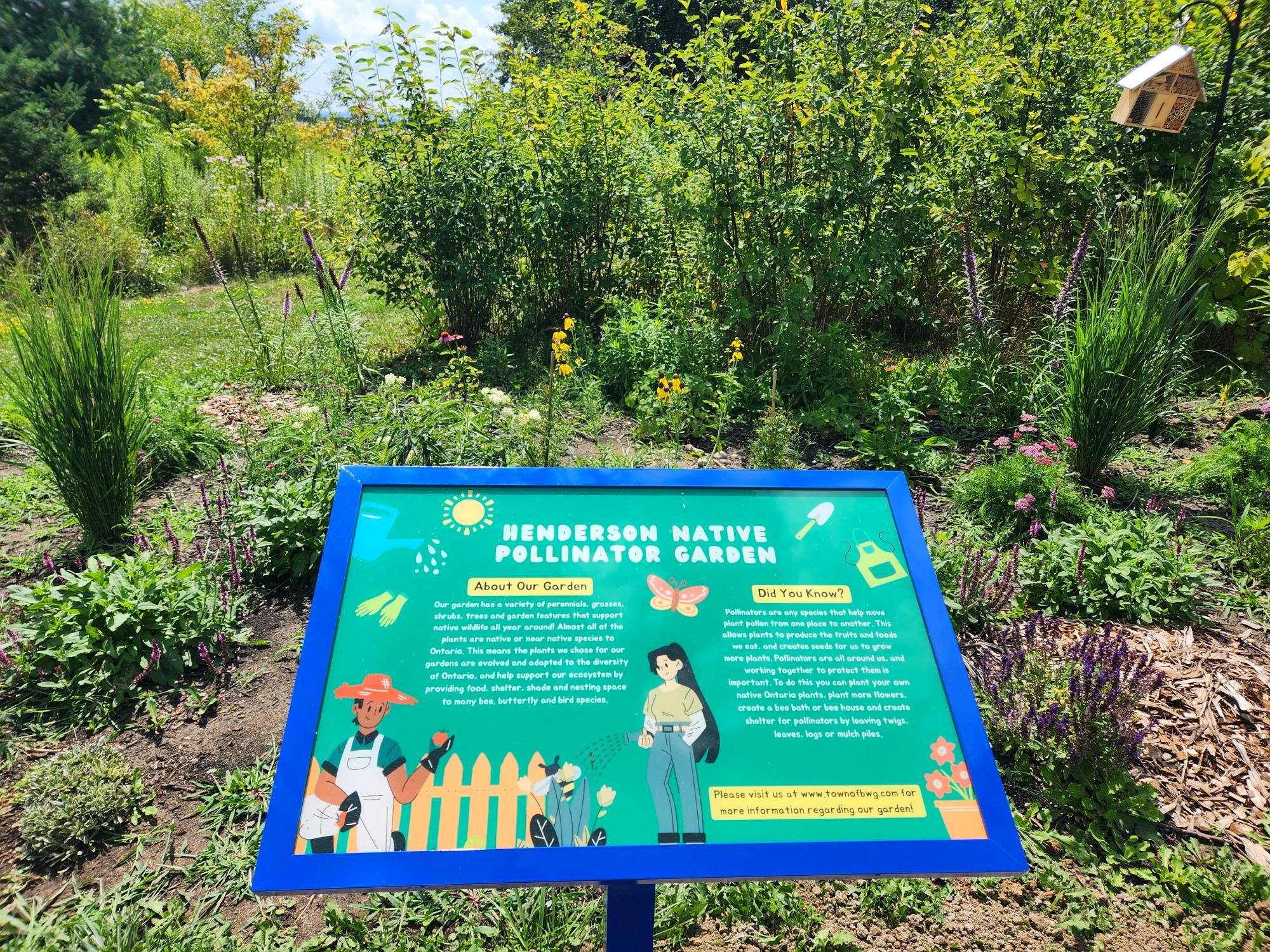
In June of 2025, the Town of Bradford West Gwillimbury’s Parks department planted two native pollinator gardens, south of fields 3 and 4 at Henderson Memorial Community Park located at 3171 Line 9, Bradford Ontario L3Z 2A5.
Why Native Plants Matter
Native plants are species that have been growing in an area for thousands of years. This means the plants and other wildlife around them have been forming deep ecological relationships which help each other thrive.

Native plants have adapted to our soil, climate and ecosystems over time and thus play a critical role in supporting pollinators by providing food, shelter, and nesting space throughout the year. Supporting our native pollinator species has many benefits such as providing us with fruit, vegetables and nuts, supporting our oil, fiber and raw material production, preventing soil erosion and increasing carbon sequestration to mitigate climate change.
What’s in Our Gardens?
The Henderson Native Pollinator Gardens feature a rich variety of perennials, grasses, shrubs, trees and features.
- Bee hotels (one in each garden) provide safe nesting space for bees.
- Logs and mulch offer shelter and nesting during Canadian harsh winters.
- The blend of flowering perennials, grasses, shrubs and trees attract birds, butterflies and insects while enhancing biodiversity, creating shelter, nesting space and breeding habitat

The gardens include a variety of native plants. The original native species planted include:
- Service Berry (Amelanchier)
- Honeysuckle Kodiak (Diervilla rivularis)
- Wild Columbine (Aquilegia candensis)
- Canada Anemone (Anemone candensis)
- Swamp Milkweed (Asclepias incarnata)
- Common Yarrow (Achillea millefolium)
- Field Pussytoes (Antennaria neglecta)
- Dense Blazing Star (Liatris spicata)
- Black Eyed Susan (Rudbeckia hirta)
- Gray-Headed Coneflower (Ratibida pinnata)
- Purple Coneflower (Echinacea purpurea)
- Blue Switch Grass (Panicum virgatum)
What do they provide?
The Serviceberry trees provide nectar, berries and provide habitat which supports a variety of butterflies, bees, bugs, birds, and moths. The berries the trees produce were traditionally used by Indigenous peoples in pemmican, a mixture of dried meat, rendered fat and crushed serviceberries!
The Honeysuckle bushes provide nectar for bees and hummingbirds in addition to providing habitat to ground nesting birds and native insects. The variety planted in the Henderson is not invasive, like the commonly known exotic honeysuckle.
The large variety of wildflowers planted throughout the gardens provide food sources for insects, butterflies, moths, bees and birds of all sizes! The variety of flowers bloom throughout different times of the year which provide our wildlife with resources from spring until fall.
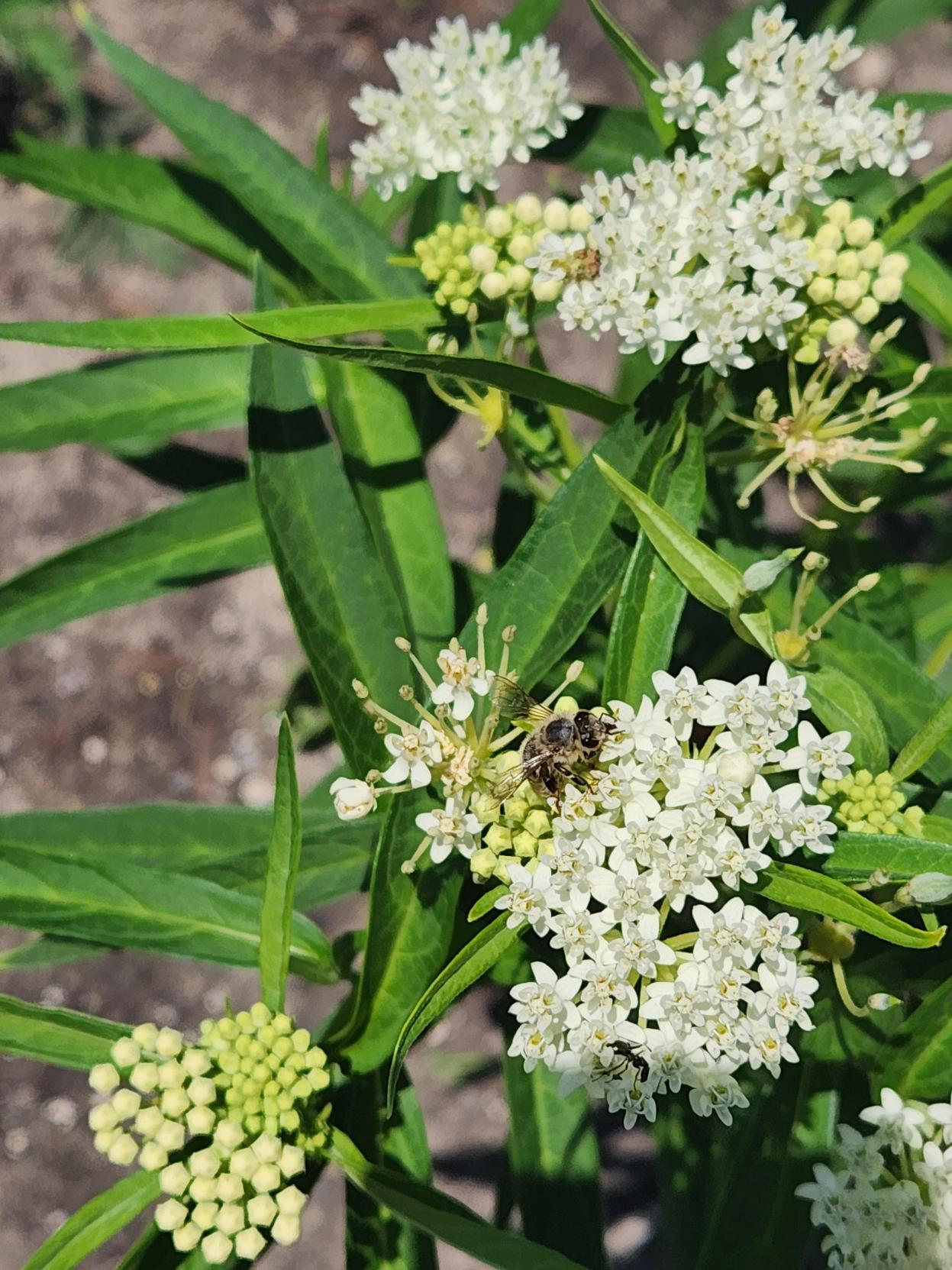
The wild columbine blooms are shaped perfectly for hummingbirds, milkweed provides the only food source for monarch butterflies and the purple coneflower’s have been used traditionally as an immune booster, making it a staple in herbal medicine.
The switch grass provides the gardens with nesting cover for a variety of birds, shelter for insects and cover for small mammals through all seasons of the year. The grass also provides seeds that are eaten by songbirds.
How You Can Help
There are many ways you can help our native species! The town encourages residents to plant native species whenever possible.
Many greenhouses have a variety of native species available at a variety of sizes, prices, colours and specific growing needs.
To create the most impactful native pollinator garden you can:
- Plant Ontario native species.
- Use a variety of flower shapes to cater to many pollinator types.
- Choose species with different bloom times, this will provide pollinators with food year-round.
- Leave plant debris over winter, providing shelter for insects and food for birds.
- Create bee baths to give our pollinators a cool place to rest and drink.
- Build/purchase bee hotels (as seen in our two gardens) to give pollinators shelter and a place to nest.
- Avoid using pesticides.
Pollinator gardens can be any size and still make a huge impact! If space is restricted, you can create container beds, which will not only help our pollinators but add interest to your property.
Contact Us